Facing Deportation Fears

How Technology Can Rebuild Community Trust
For some immigrant families, the simple act of showing up to a parent-teacher conference feels like stepping into a spotlight, carrying the weight of what-ifs. Will my accent give me away? Will my name on a sign-in sheet lead to trouble? The fear is real—and it’s silencing parents voices that should be heard the loudest.


Today’s political climate is intensifying these fears, causing families to retreat more and more into the shadows. "On Tuesday, U.S. President Donald Trump’s administration announced it had rolled back Biden-era guidance that limited federal immigration arrests near sensitive locations, including schools, hospitals, and churches," according to Reuters. This policy shift has sent shockwaves through immigrant communities, dismantling protections that once allowed families to engage in their communities without constant fear of exposure. In some high-immigrant neighborhoods, "church services have even been canceled as families fear gathering could make them vulnerable to immigration enforcement," reported the Chicago Tribune.Families now face even greater uncertainty, leaving many to question whether engaging with schools, churches, or other organizations is worth the risk.

When families disengage, children are often the first to feel the impact. They miss out on opportunities to thrive, falling behind academically and socially. This is not just a loss for the family; it’s a loss for the entire community, which depends on the well-being of its youngest community members to flourish.


The Ripple Effect of Fear on Communities

The consequences of this fear are far-reaching. Schools lose out on vital parent engagement, which is critical for student success. Nonprofits struggle to connect families with essential services. Over time, this disengagement weakens the bonds that create resilient neighborhoods.


For schools, the lack of parent involvement creates challenges in building partnerships that foster student success. Educators know that when parents are informed and involved, students thrive. Without that engagement, schools struggle to meet their goals, and the divide between families and institutions grows wider. Safety—a core value we all share—depends on trust and connection. When those are eroded, everyone feels the impact. But, clear communication can overcome distrust and fears.

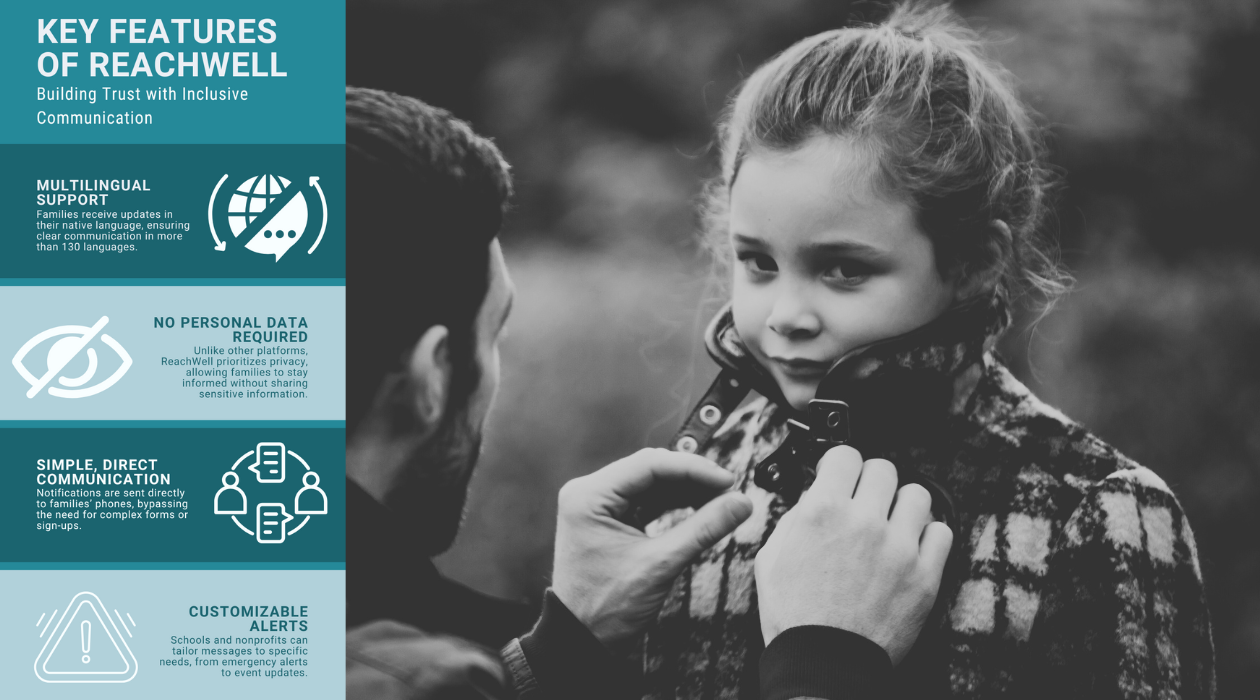
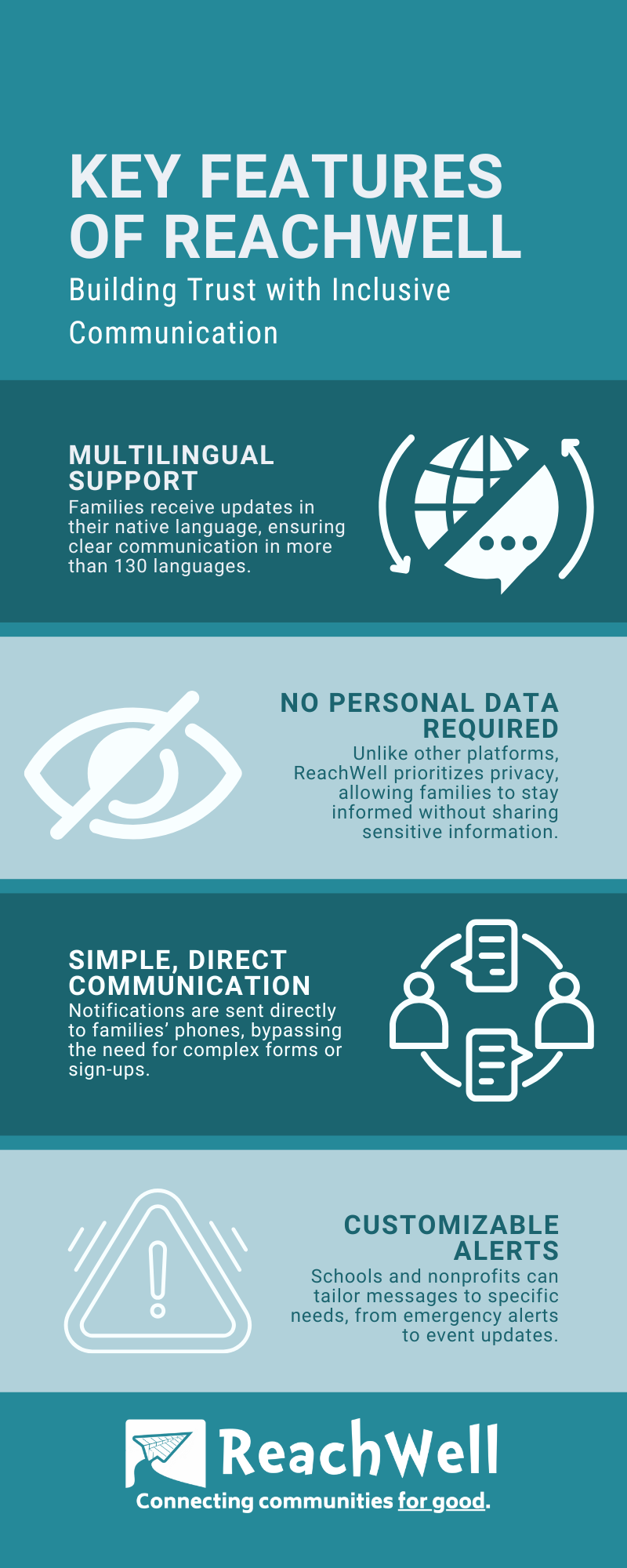
Key Features of ReachWell

Multilingual Support:

Families receive updates in their native language, ensuring clear communication for all.

No Personal Data Required:

Unlike other platforms, ReachWell prioritizes privacy, allowing families to stay informed without sharing sensitive information.

Simple, Direct Communication:

Notifications are sent directly to families’ phones, bypassing the need for complex forms or sign-ups.

Customizable Alerts:

Schools and nonprofits can tailor messages to specific needs, from emergency alerts to event updates.


ReachWell: Bridging Gaps with Privacy-First Communication

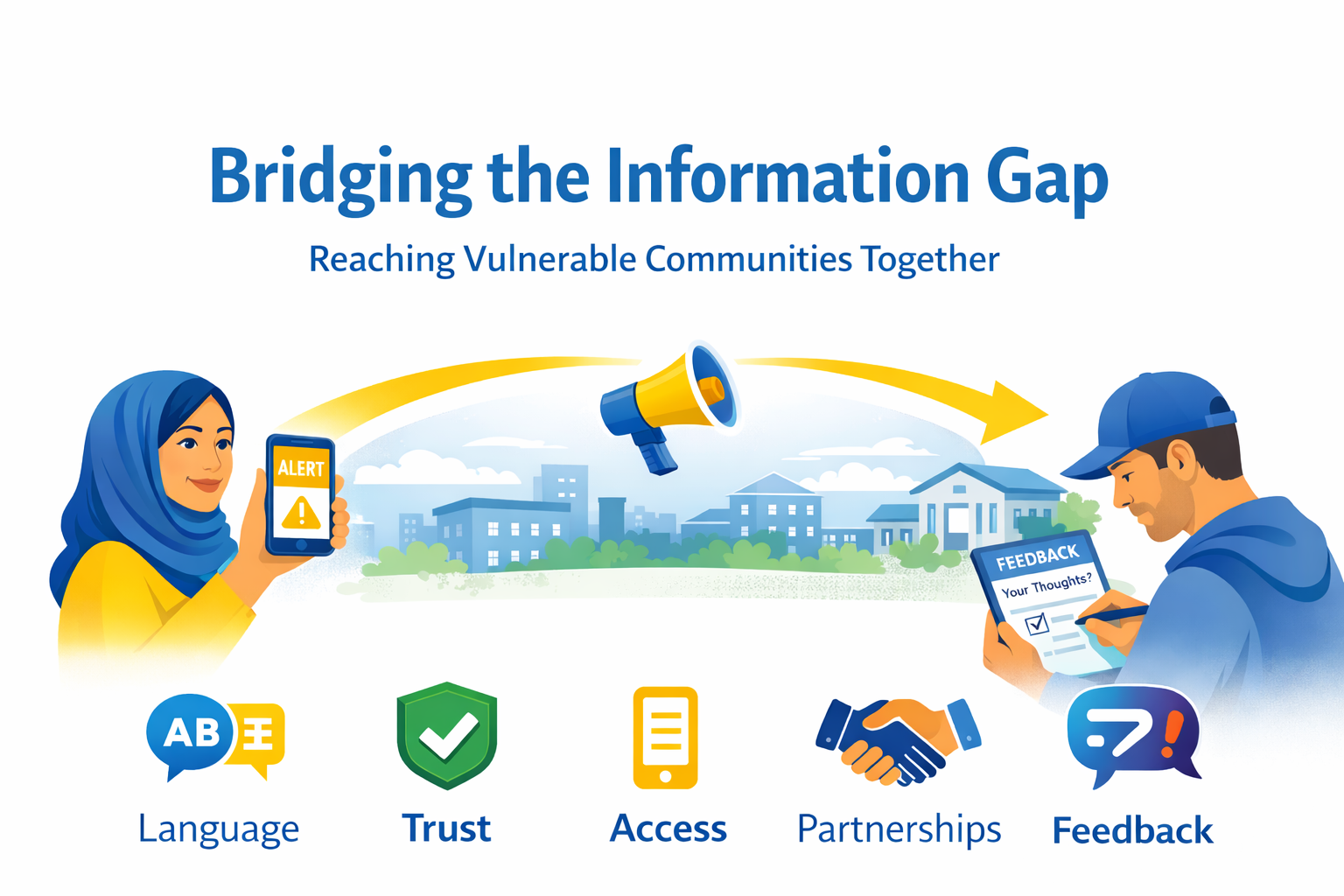
This is where tools like ReachWell come in. Our multilingual communication platform is designed to bridge the gap between families and the organizations that serve them—without requiring personal contact information. Unlike other communication platforms, ReachWell ensures that families can access critical updates anonymously, reducing fear and fostering trust.


Explore how we’re making a difference. Start your FREE ReachWell channel today. 

December 18, 2025
What inclusive communication looks like in practice
December 17, 2025
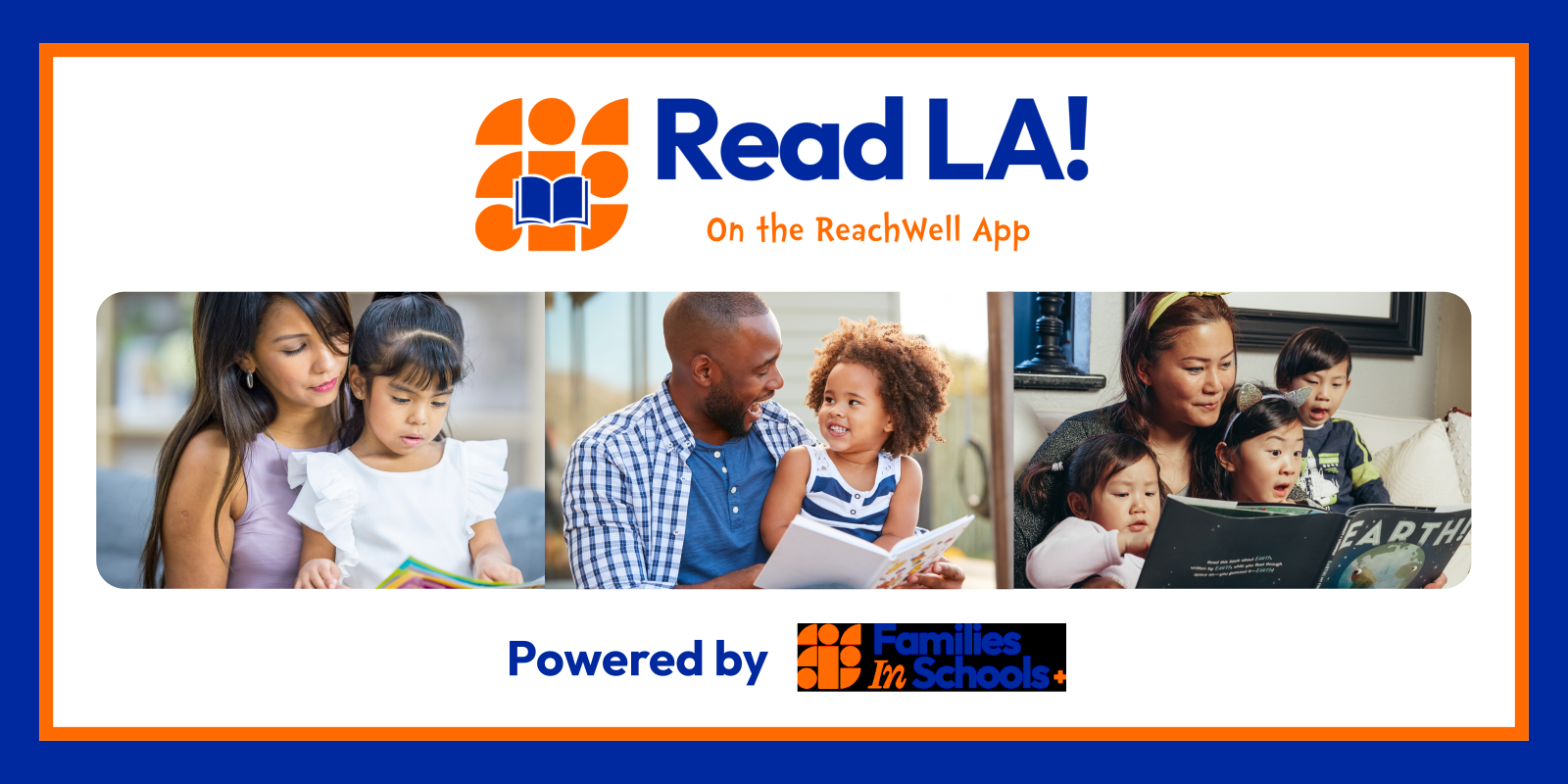
We’re excited to announce that Families In Schools (FIS) has launched Read LA! on the ReachWell app ! Read LA! will bring early literacy information and activities to families across Los Angeles through the app to equip parents and caregivers with the tools they need to support their children’s literacy at home and advocate for them at school. Powered by ReachWell, the app makes content available in over 130 languages and requires no personal information, reducing any barriers to entry. All content has been carefully curated to bring only the highest quality tools and information to LAUSD families, including activities that align to their schools reading instruction curriculum called CKLA. Currently, only 43% of Los Angeles third graders are reading at grade level— FIS and the Read LA! Coalition are committed to reversing this trend, ensuring that Los Angeles children can read and thrive. Our goal is to have 70% of LAUSD third graders reading proficiently by 2030. The Read LA! app—which follows our efforts to ensure good instruction in the classroom—will help us achieve this goal. “While improving classroom instruction is at the crux of improving reading outcomes for children, we know that engaging and equipping families to be strong partners in their children’s education is a powerful driver for literacy success,” said Yolie Flores, President & CEO of Families In Schools . “We’re excited to partner with ReachWell because we know families want access to information and guidance to ensure their children can read; they want to do everything in their power to help their children be successful in school and in life.” “That’s why Read LA! on the ReachWell app was built with input from our parent and caregiver focus groups, coalition, and Literacy Ambassadors to put trusted, curated early literacy resources directly into families’ hands,” said Olga Corona De La Cruz, Sr. Campaign Director of Read LA! . Watch this video by Olga to learn a little more about the app and how it helps our campaign. Zuben Bastani, CEO & Founder of ReachWell , has worked closely with FIS to bring Read LA! to families across Los Angeles and beyond. “Our mission at ReachWell is equitable community engagement,” said Bastani. “We designed the most accessible tool out there because everyone has a right to access information and resources easily. I know how critical Read LA! is in Los Angeles’ early literacy community, and we are so excited they have chosen to join ReachWell.”  “Our instructional video makes it easy to download the app,” said Corona De La Cruz. “We want families of young children to have the literacy tools and information they need at their fingertips. Your child’s future starts now—download the app today!”
By Zuben Bastani September 30, 2025
From crisis to connection: Carbondale’s story of rapid growth.
By Zuben Bastani September 25, 2025
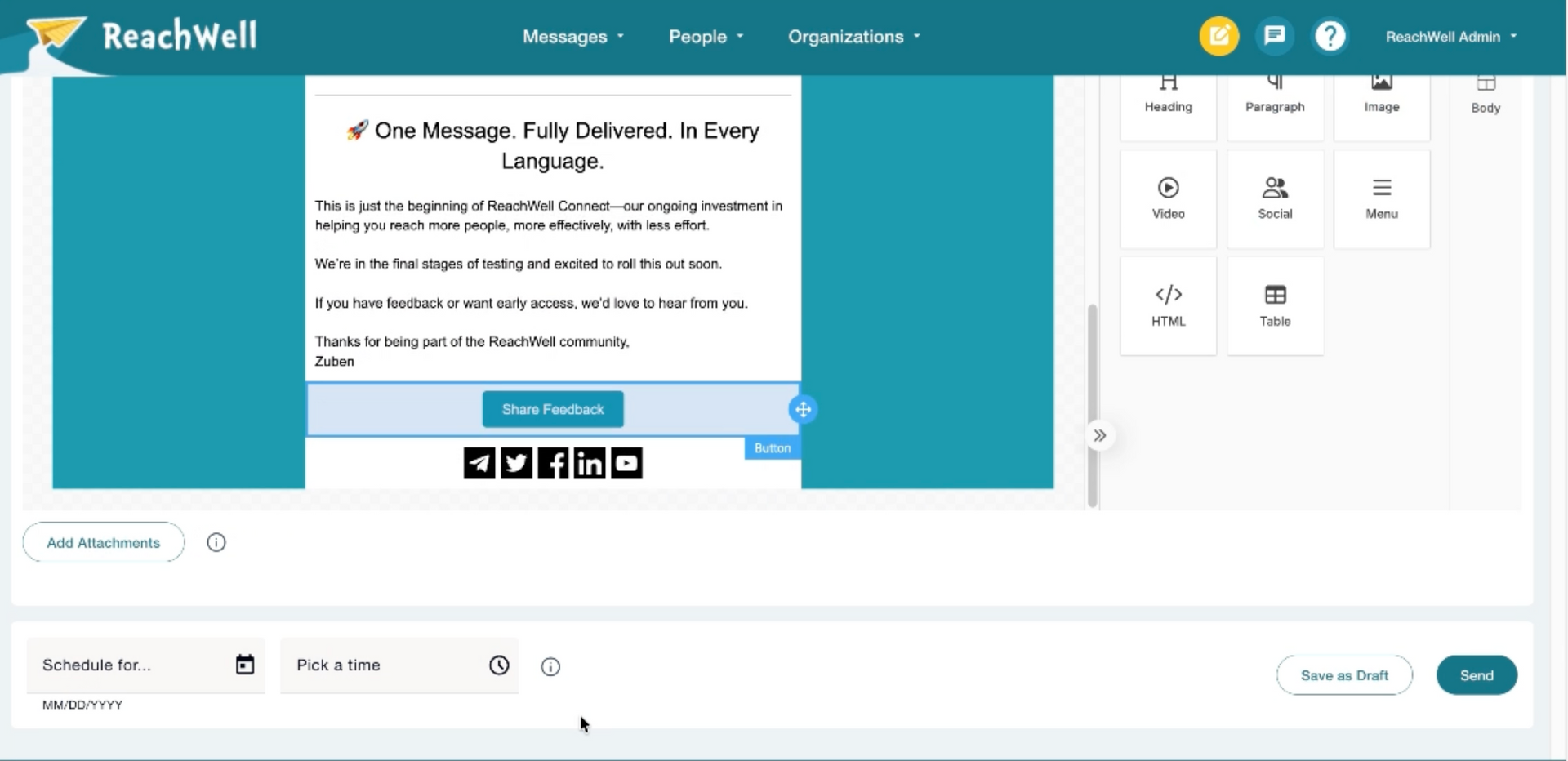
Why Communication Without Gaps Is the Future of Public Engagement
By Zuben Bastani June 17, 2025
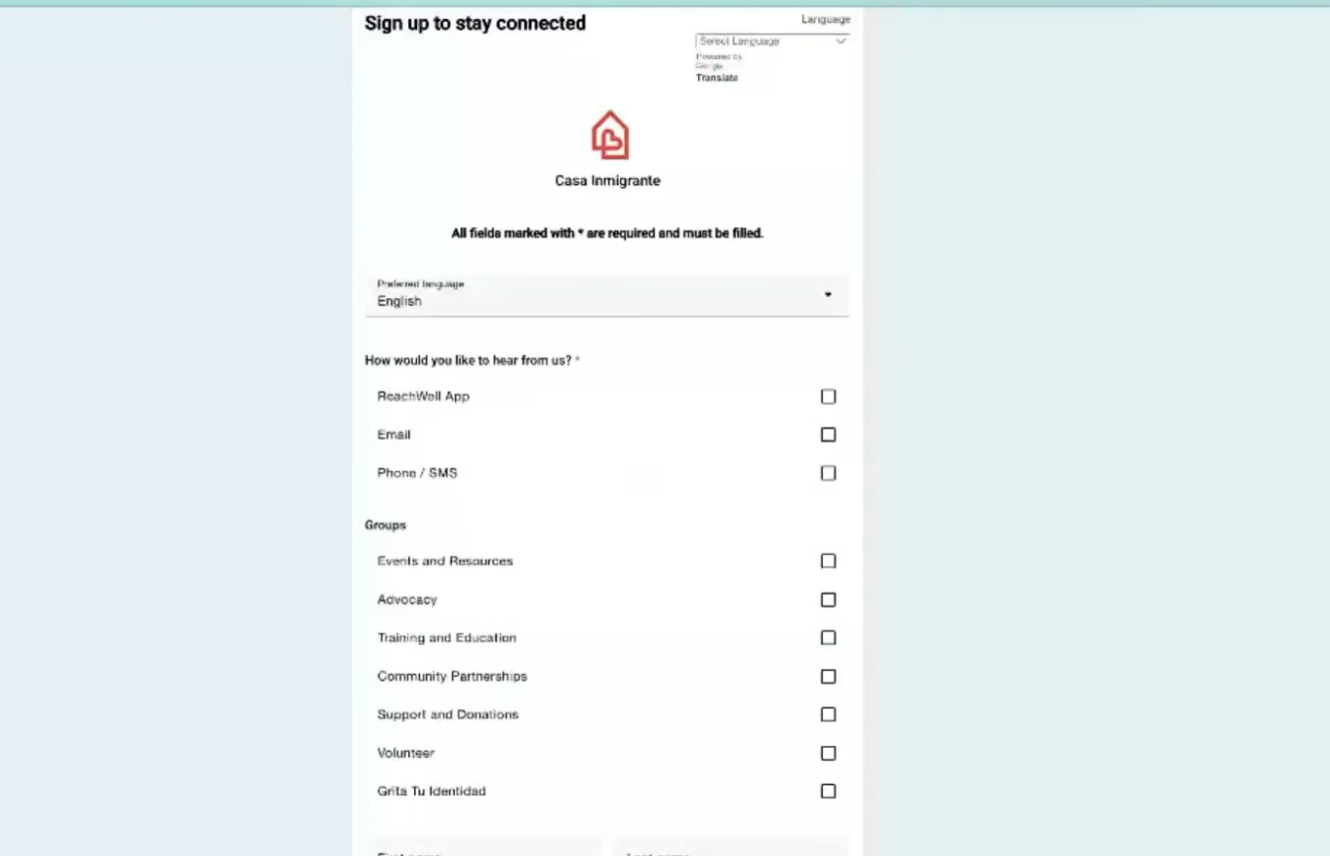
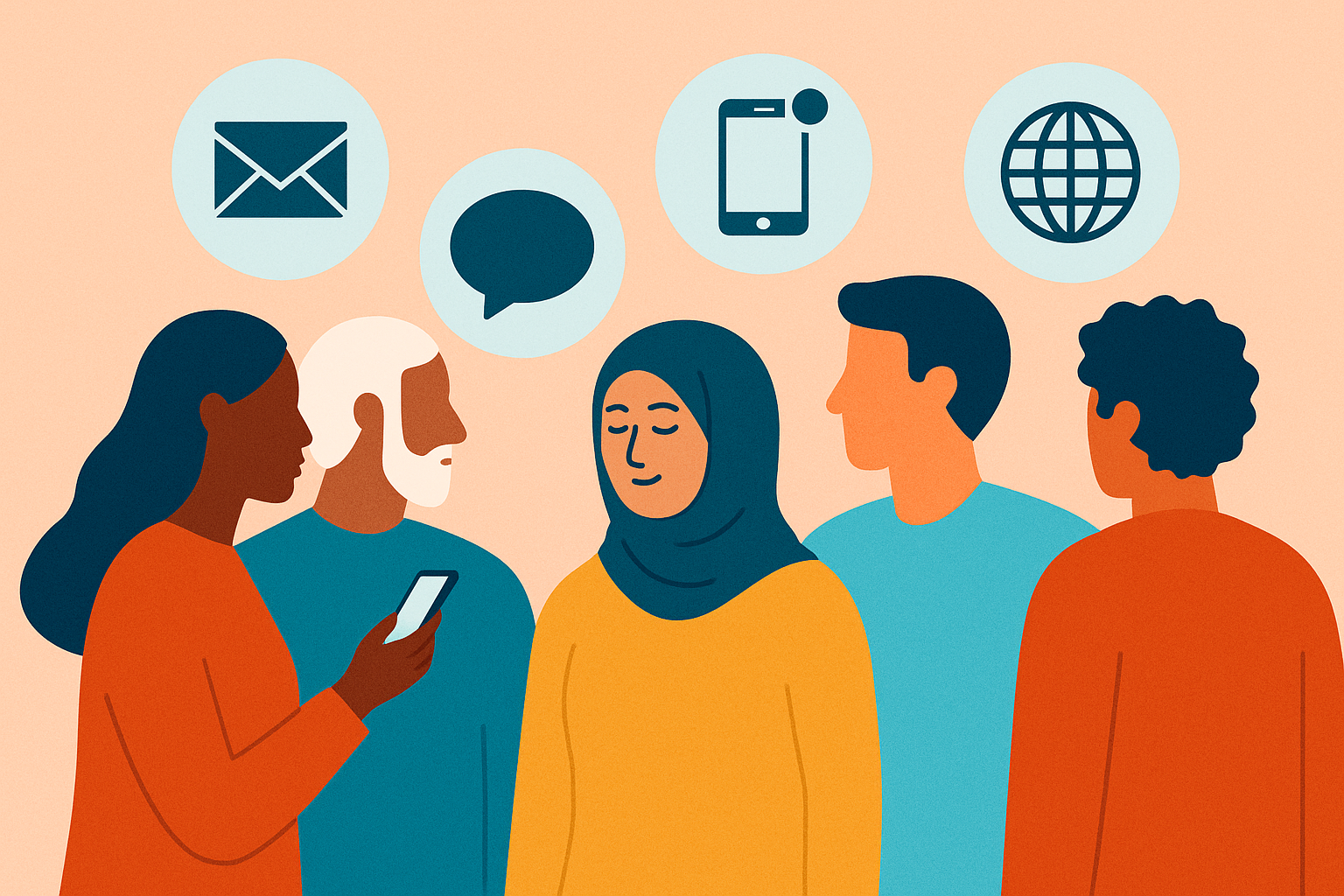
Government distrust is at an all-time high. Many residents are wary of sharing their personal information with public agencies, often due to fears of surveillance, spam, or data misuse. This hesitation is especially acute among low-income and unhoused individuals who frequently change phone numbers due to service lapses, making traditional outreach efforts ineffective. Most public communication systems fall short. They rely on platforms like Mailchimp or Constant Contact, which get lost in crowded inboxes. Social media, while pervasive, is designed to harvest data and push ads—not to protect user privacy. Even emergency alert systems often require residents to sign up and share their location, further eroding trust. Text messaging, often called the holy grail of communication, is no longer a guaranteed solution. People guard their phone numbers carefully, especially when interacting with the government. They fear being spammed or having their data sold. So how can agencies inform and protect the public without breaching their trust? A New Approach to Community Communication Using ReachWell's extensive experience and broad customer base, here are some recommendations to consider when engaging your community in a less intrusive yet more effective manner: Offer Communication Choices : Let residents decide how they want to receive information—whether it's through text, email, voice calls, app notifications, or a combination. This respects personal preferences and helps reduce message fatigue. Respect Anonymity : Not everyone wants to share personal contact details. Provide anonymous access to messages via public channels or apps that don’t require identifying information. Support Multilingual Access : Language should never be a barrier to safety or services. Translate messages into the primary languages spoken in your community, and consider text-to-speech options for low-literacy audiences. Allow Topic Subscription : Let people select specific topics or groups they care about. Targeted messages reduce noise and increase engagement. Minimize Data Collection : Collect only the data you truly need. Avoid tracking location or behavior unless absolutely necessary—and be transparent about what is collected and why. Ensure Accessibility : Meet or exceed accessibility standards (such as WCAG 2.2 AA compliance) so all residents, including those with disabilities, can access and understand public messages. These practices foster trust, improve message delivery, and help ensure no one is left out of important conversations—especially in moments of crisis or community need. Expanded Real-World Examples: Trusted by Diverse Communities El Paso County, CO (Colorado Springs area) uses ReachWell to distribute emergency alerts—including shelter-in-place orders and missing persons reports—in over 130 languages. Residents can receive alerts even without providing contact information. The Town of Carbondale, CO keeps its multilingual and low-literate residents informed of community events, social services, and public works projects using WCAG 2.2 AA-compliant messaging and text-to-speech capabilities—ensuring no one is left behind. Tucson, AZ : Child-Parent Centers, a Head Start provider, uses ReachWell to keep 500+ staff updated on safety alerts, training sessions, and HR notices across 130 languages—building internal trust through inclusive communication. Boulder County Housing Authority ensures ongoing connection with residents—even after their contact information changes—by sending updates about emergencies, upcoming maintenance, and resident services using ReachWell’s multilingual and anonymous outreach tools. Conclusion Building trust with residents starts with giving them control. When governments let people choose how they connect, what they receive, and in what language—trust grows. ReachWell is proving that communities can be kept safe and informed without sacrificing privacy or accessibility. When people don’t trust the system, it’s time to change the system. ReachWell is doing just that. BOOK A DEMO TODAY
February 25, 2025
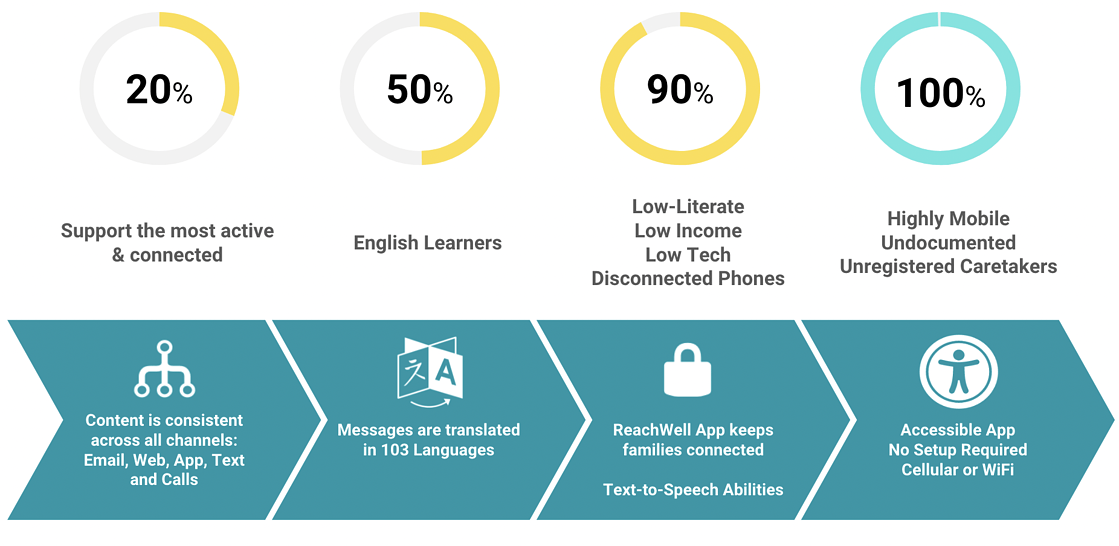
In order to maximize reach, we've applied the following approach to quickly connect all families.
December 19, 2024
Evaluating your communications strategy to align with what is important to you.
A person is holding a cell phone next to a woman sitting at a table using a cell phone.
November 18, 2024
Discover how simplifying language fosters accessibility, trust, and inclusive community engagement. Learn practical strategies and explore how ReachWell helps connect diverse audiences in over 130 languages.
An aerial view of a mountain range with trees in the foreground and mountains in the background
October 9, 2024
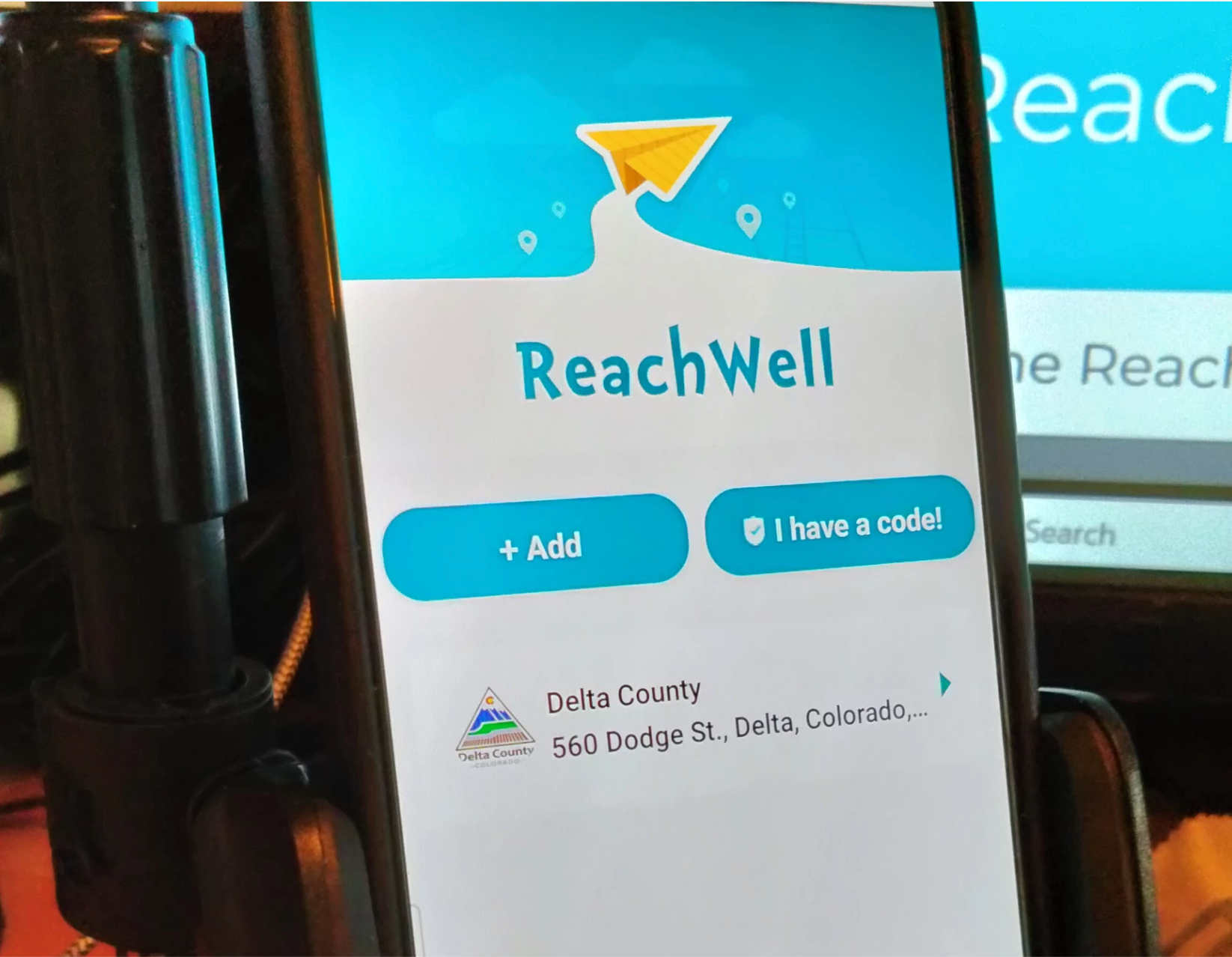
Discover how Delta County is revolutionizing equitable communications with ReachWell, offering multilingual tools to strengthen families and support human services and emergency management.
September 12, 2024
Center for Inclusive Design and Engineering joins ReachWell to ensure people with Intellectual and Developmental Disabilities have the tools and knowledge they need to confidently prepare for emergencies.
Show More